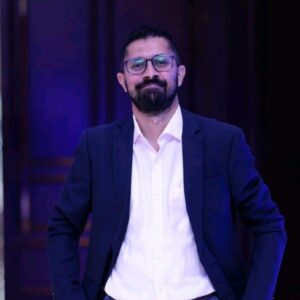
Saptarshi BhattacharyaChief People Officer
Mr Bhattacharya joined Motilal Oswal Private Equity as the Chief People Officer in 2023. Prior to joining here, he worked with Bajaj Allianz General Insurance since 2007 in multiple HR roles including Heading Recruitments, HR Shared Services & HR Business Partner.
He has led teams that have delivered hiring of more than 5000 professionals, led HR Technology Automations, Employee Wellness, HR Analytics and Employee Cost & Productivity control projects.
He works closely with multiple portfolio companies on people interventions like relooking at the Organisation Structures, Hiring of Critical CXO roles, bringing in best HR Practices and Policies, Implementing Performance Management Frameworks, Job Evaluation methodologies and helping in ESOP implementations.
He holds a Masters degree in HR from Army Institute of Management Kolkata and is a graduate from Symbiosis Pune. He is also a Hays certified Job Evaluation specialist and has won multiple awards on areas around diversity and inclusion, 40 under 40 and was a part of the Future CXO club in Bajaj Finserv.
HR STRATEGY

1. HR drives the business – what is your take on this in the context of Private Equity, and how does it shape your human capital strategy when working with portfolio companies?
Private equity investments often focus on established businesses operating at scales of thousands of crores. Promoters of these companies value the human aspect deeply, having built their businesses alongside loyal teams. For instance, one of our Hyderabad based portfolio companies (a medical devices company based in Hyderabad) operates with a 4% annual attrition rate due to the promoter running the firm with family-like trust. The strategy centers on bringing process efficiency while maintaining deep empathy and respect for the talent that built the organization.
2. Value creation in Private Equity is shifting heavily from financial engineering to talent execution. Where are HR leaders still falling short in acting as true value-creation partners, and how do you measure HR’s direct impact on EBITDA and fund returns?
HR value creation operates across three distinct buckets rather than traditional operational HR:
- Strategic Hiring & Board Placement: Placing transformative CXOs (CEOs, CFOs, COOs) and establishing diverse boards well ahead of an IPO. For example, for one of our companies preparing for an IPO next year a diverse board was appointed incorporating leaders from automotive, BFSI, and core industrial sectors
- Process Professionalization: Implementing core HR infrastructure such as 9-box talent grids, competency frameworks, structured performance management, and optimized exit/F&F processes
- Org Redesign & Productivity: Transitioning structures where 40–50 leaders directly report to a promoter into structured, scalable models that drive sales growth and frontline productivity
TALENT MANAGEMENT

3. What is your playbook for hiring, developing, and integrating CXO talent in portfolio companies – particularly when transitioning a promoter-led business into an institutionally run organization?
Executive hires are never treated as “implants” from the fund; they must be fully owned by the portfolio company and its promoter. The hiring process is promoter-led and patient, often presenting top candidates to ensure chemistry. Offline relationship-building is prioritized – such as having a candidate CEO and their family share dinner with the promoter’s family – to evaluate alignment beyond resumes.
4. In today’s volatile market environment, how do you design incentive, retention, and performance models that align founder, portfolio leadership, and fund-level objectives?
Alignment relies on targeted wealth-creation structures:
- CEOs: Encouraging co-investment opportunities so leaders have direct skin in the game alongside promoters and fund partners
- CXOs / Mid-Management: Structuring long-term ESOP schemes – often introducing ESOPs to a portfolio company for the first time
- Broader Retention & Benefits: Extending wealth-sharing to broader employee layers (e.g., One of our Bangalore based companies, extended ESOP access to long-tenured operational staff) and building holistic welfare support beyond basic insurance policies
TECHNOLOGY AND ANALYTICS

5. How are AI, data analytics, and modern HR technology transforming the way PE funds conduct human capital due diligence pre-investment and evaluate leadership capability post-investment?
Pre-investment compliance and talent due diligence remain intentionally traditional, leveraging specialized advisory partners (e.g., Big Four or specialized firms for wage-code updates) to maintain strict oversight. Post-investment, technology adoption focuses on operations – such as automated candidate screening in BFSI portfolios, chatbot-driven employee servicing, and performance management platforms.
6. What are your thoughts on workplace innovation in HR, particularly in building high-performance, resilient cultures across scaling portfolio companies operating under hybrid or modern work models?
Workplace culture stems from authentic, ground-level values rather than standardized hybrid policies. Initiatives – such as providing safe factory transport for young female workers from nearby villages, engaging their families directly, and offering financial support upon an employee’s marriage, especially for blue collar employees. Innovations center on deep employee connection and welfare.
ROLE OF HR IN THE ORGANISATION OF FUTURE

7. As portfolio companies mature toward public listings or trade sales, what role does the HR function play in setting up board governance, succession planning, and Independent Director integration?
Independent Directors (IDs) are integrated long before an exit or public listing to challenge and guide leadership. Proactive mapping of diverse IDs across sectors ensures cross-industry insights. Alignment requires engaging promoters early during pre-diligence to ensure openness to board feedback, professionalization, and market expansion.
8. Looking ahead at the Private Equity landscape across India and Asia, what will distinguish the winning organizations of the next decade from a leadership and cultural standpoint?
Winning organizations will excel at comprehensive change management—adapting sales distribution, embracing modern workforce dynamics, and updating infrastructure (SAP, cybersecurity, HR tech). Flexibility in evolving from founder-centric operations to professional management structures is critical.
PERSONAL

9. Reflecting on your 18+ year journey across financial services and Private Equity, what are 2 or 3 pivotal moments in your career that fundamentally reshaped your leadership philosophy?
- Managing Crisis during COVID-19: Leading HR initiatives across 80,000+ employees and ~300,000 dependents at Bajaj. Designing long-term support systems – such as funding children’s education up to age 21 for deceased employees – redefined the human role in HR
- Transitioning into PE Value Creation: Shifting from corporate HR to portfolio advisory required building bespoke strategies for diverse companies (from medical devices like Sensor Core to safety equipment like Karam Safety) and helping founders through institutional scaling
- Personal Purpose: Balancing corporate responsibility with personal commitments in wildlife photography and supporting animal shelters
10. As someone evaluating and advising C-suite leaders across portfolio companies, what core capabilities or mindsets do you believe will define the next generation of high-impact CXOs and business leaders?
The ultimate leadership metric is a balance of hunger and empathy – maintaining a drive for performance and scale while remaining grounded in humility and people-first leadership.